
Small dogs have a reputation problem. There’s a persistent idea — usually held by people who’ve never actually lived with a small breed- that they’re yappy, neurotic, and less “real” than large dogs.
That idea is wrong.
Small dogs include some of the most affectionate, adventurous, trainable, and genuinely wonderful dogs alive. They also include some that are genuinely challenging: stubborn, anxious, loud, or physically fragile. The category is broad.
This guide covers 35 of the best small dog breeds in honest detail: what they’re actually like to live with, who they’re right for, who they’re wrong for, and what you need to know before bringing one home. No breed here is presented as perfect, because no breed is, and overselling a breed leads to dogs in shelters.
Size definition used throughout: “Small” means under 25 lbs at adult weight. Some breeds sit right at the borderline — those are noted.
The 35 Best Small Dog Breeds
1. Cavalier King Charles Spaniel
Weight: 12–18 lbs | Height: 12–13 inches | Lifespan: 9–14 years
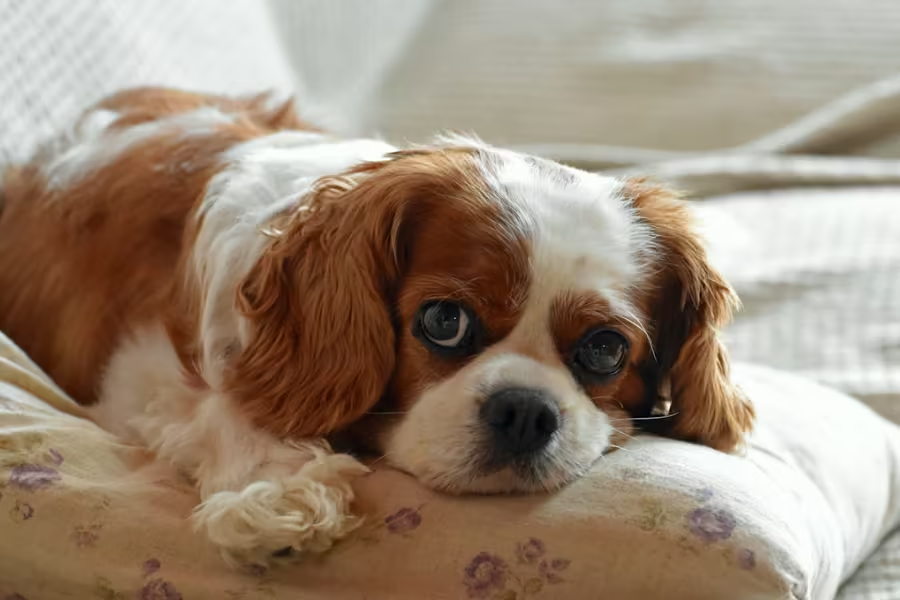
The Cavalier is consistently among the top recommendations for first-time small-dog owners, and it earns that status. They are genuinely gentle — not just with adults but also with children, the elderly, and other animals. Their default emotional setting is “near you, content.”
They’re not a low-energy dog, but they adapt. A Cavalier who gets a daily walk and some indoor play is happy. So is one who gets four hours of hiking. They follow your lead.
The honest part: Cavaliers have serious health issues as a breed. Mitral valve disease (a heart condition) affects the majority of Cavaliers by age 5, and syringomyelia (a neurological condition) is present in a significant percentage. Before buying from a breeder, ask specifically about heart and neuro health testing. This is not a breed to get from a backyard breeder or pet store.
Best for: Families, singles, elderly owners, apartment life
Not ideal for: Anyone unwilling to budget for potential health costs
2. French Bulldog
Weight: Under 28 lbs | Height: 11–13 inches | Lifespan: 10–12 years
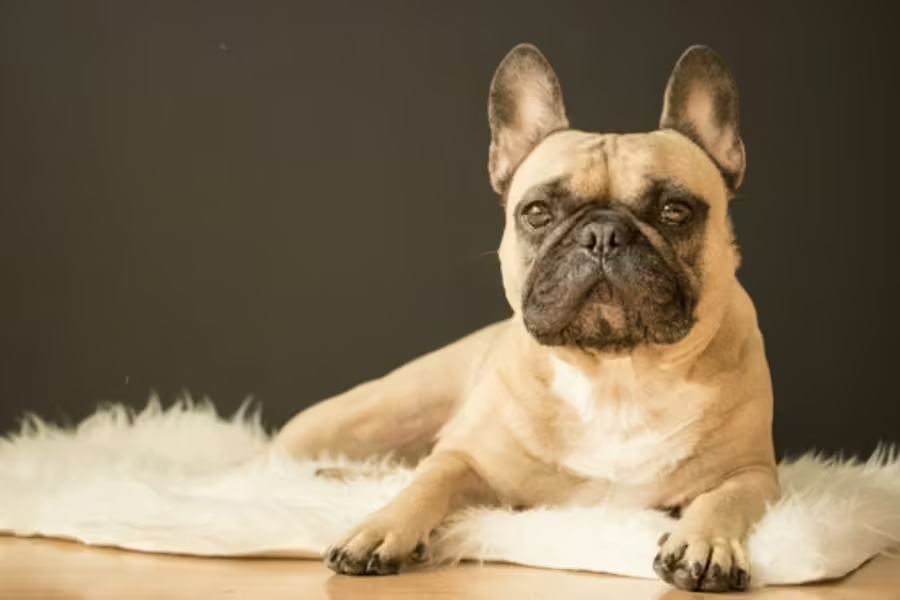
The French Bulldog has been one of the most popular dog breeds in the world for years, and the appeal is obvious: they’re compact, funny, affectionate, and adaptable. They don’t need much exercise. They’re quiet (mostly). They attach strongly to their people.
What the photos don’t tell you: Frenchies are a brachycephalic (flat-faced) breed, which creates real health challenges. They overheat easily. They snore, wheeze, and sometimes struggle to breathe in hot weather or after exertion. They’re prone to spinal issues, skin fold infections, and eye problems. Airline travel is risky for them. Surgery carries a higher anesthetic risk due to their airways.
These aren’t reasons not to get one — but they’re reasons to go in with full awareness. A Frenchie from a reputable breeder who selects for better respiratory conformation (more nostril space, less exaggerated snout) will have a materially better life than one from a breeder optimizing for appearance.
Best for: Apartment life, low-exercise households, people who work from home
Not ideal for: Hot climates without AC, very active owners who want a running partner
3. Shih Tzu
Weight: 9–16 lbs | Height: 9–10.5 inches | Lifespan: 10–18 years
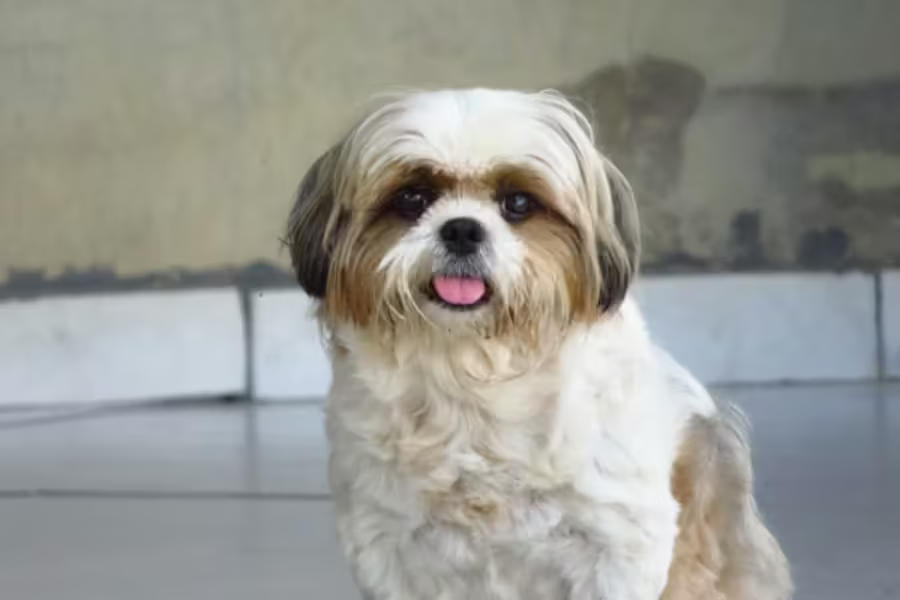
The Shih Tzu was bred to be a companion, and they take that job seriously. They are among the most reliably affectionate small breeds — happiest when near their person, content in virtually any environment, gentle with children and strangers. They don’t have a strong prey drive. They’re not particularly territorial.
The coat is high-maintenance by default, but highly manageable if kept in a short “puppy cut” — many Shih Tzu owners opt for this and see the groomer every 6–8 weeks rather than brushing daily. The long flowing coat in the show photos requires significant daily care.
They’re not very biddable (they don’t live to please you the way a retriever does), but they’re trainable with patience and positive reinforcement. Expect stubbornness on the things that don’t interest them.
Lifespan is genuinely impressive: Shih Tzus regularly live into their late teens with proper care.
Best for: Apartment life, elderly owners, families with gentle children
Not ideal for: Owners who want a highly obedient dog or a low-maintenance coat
4. Pomeranian
Weight: 3–7 lbs | Height: 6–7 inches | Lifespan: 12–16 years
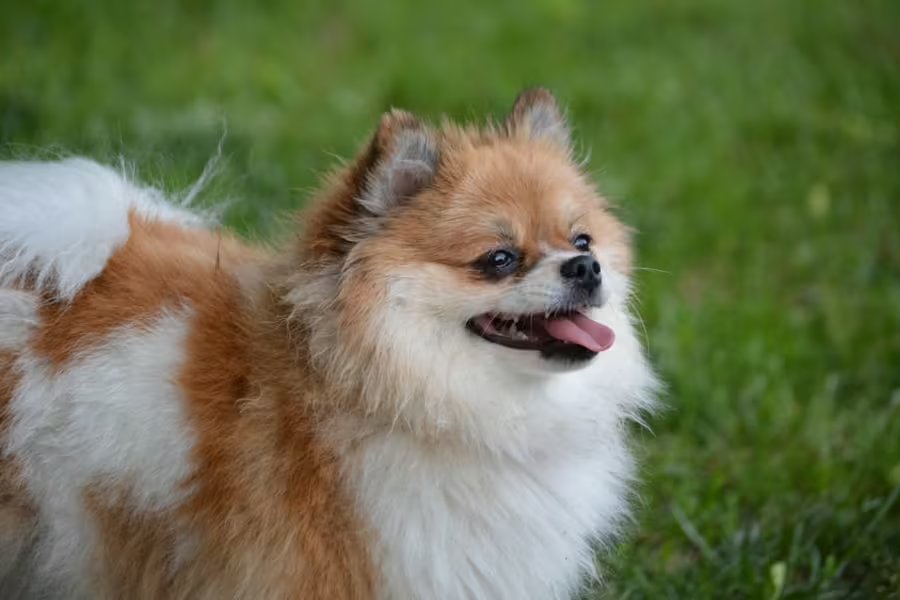
Pomeranians have a big personality in a very small package. They’re confident, curious, and often surprisingly bold — not the kind of small dog that hangs back. They alert bark (which can be managed but is natural to the breed). They’re lively and playful. They can be quite affectionate with their family while being reserved with strangers.
The coat requires regular brushing — not daily, but 2–3 times a week — and they shed. The double coat also means they don’t tolerate heat as well as short-coated breeds.
One specific concern: they’re fragile. A fall from a couch or a child sitting on them can cause injury. Homes with very young children or large dogs need to manage this actively.
Best for: Singles and couples in apartments, experienced small dog owners, people who enjoy grooming
Not ideal for: Homes with toddlers, hot climates, owners who want a quiet dog
5. Maltese
Weight: Under 7 lbs | Height: 7–9 inches | Lifespan: 12–15 years
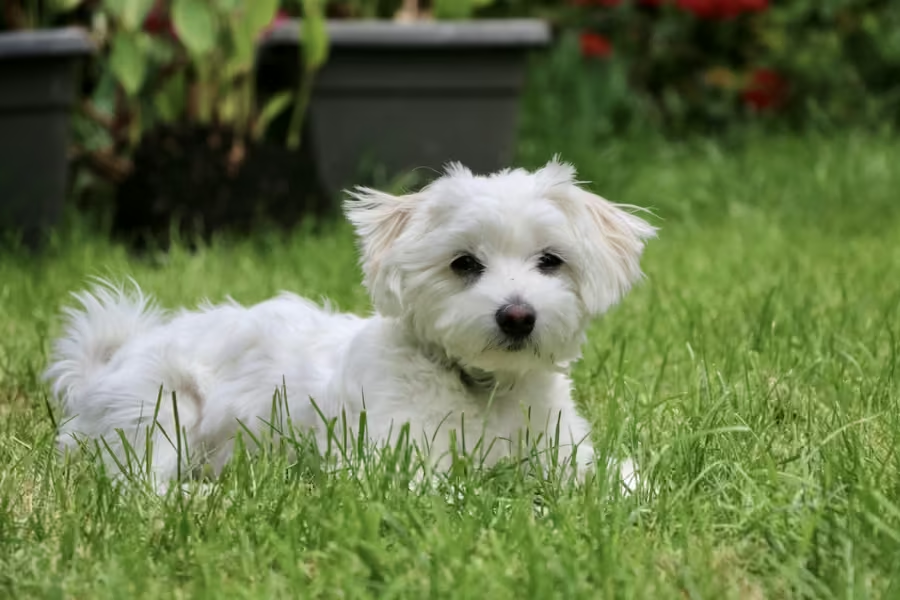
The Maltese is an ancient breed — one of the oldest toy dogs — and their constitution reflects it. They’re surprisingly hardy for their tiny size, emotionally resilient, and adaptable. They bond intensely with their primary person but are generally social and friendly.
They can develop separation anxiety if not properly conditioned to being alone — their attachment is that strong. But with appropriate training, they manage well.
Coat care is significant if kept long — the white, silky coat tangles and requires daily brushing. Most pet owners keep them in a short cut. The upside: they’re considered low-shedding and are among the better options for mild allergy sufferers.
Best for: Apartment life, individuals who are home frequently, people with mild pet allergies
Not ideal for: Owners who are away for long hours daily, households with large rough-housing dogs
6. Yorkshire Terrier
Weight: 7 lbs | Height: 7–8 inches | Lifespan: 11–15 years
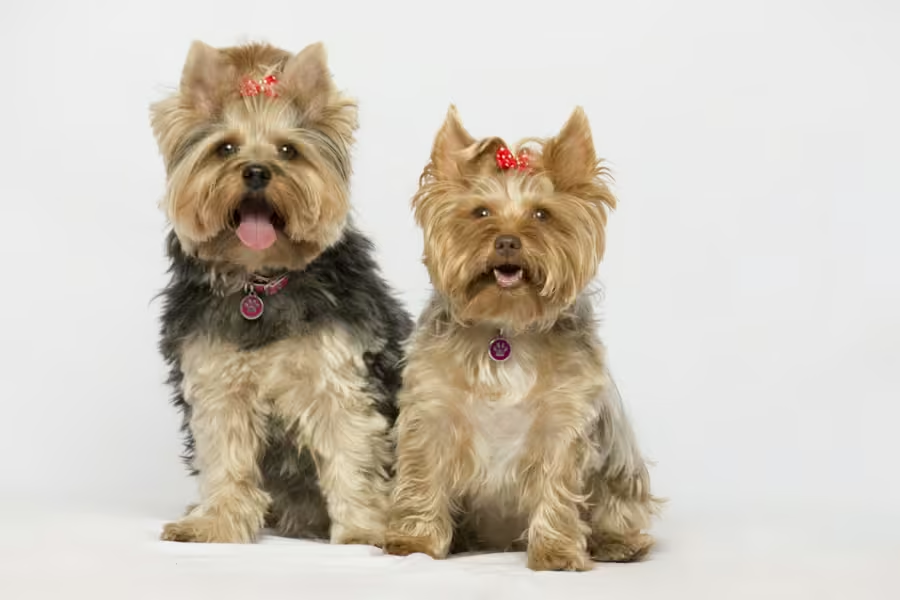
Yorkies are terriers, which means their size is misleading. They are feisty, opinionated, and often more interested in chasing rodents than sitting in your lap. That said, they’re deeply loyal, and many Yorkies are also very affectionate — they just do everything with intensity.
They’re smart and trainable, but the terrier stubbornness means training requires consistency. They will absolutely refuse to comply with commands they find beneath them unless there’s a compelling reason (usually food).
The coat is beautiful and distinctive — silky, long, in that signature blue-tan coloration — but requires significant grooming if kept long. Many owners opt for shortcuts.
Barking is a reality with Yorkies. It can be managed, not eliminated.
Best for: People who want a small dog with big dog energy, apartment life, and experienced dog owners
Not ideal for: Homes with small animals (rats, rabbits, hamsters), owners who want a very calm dog
7. Dachshund
Weight: 8–32 lbs (standard and miniature) | Height: 5–9 inches | Lifespan: 12–16 years
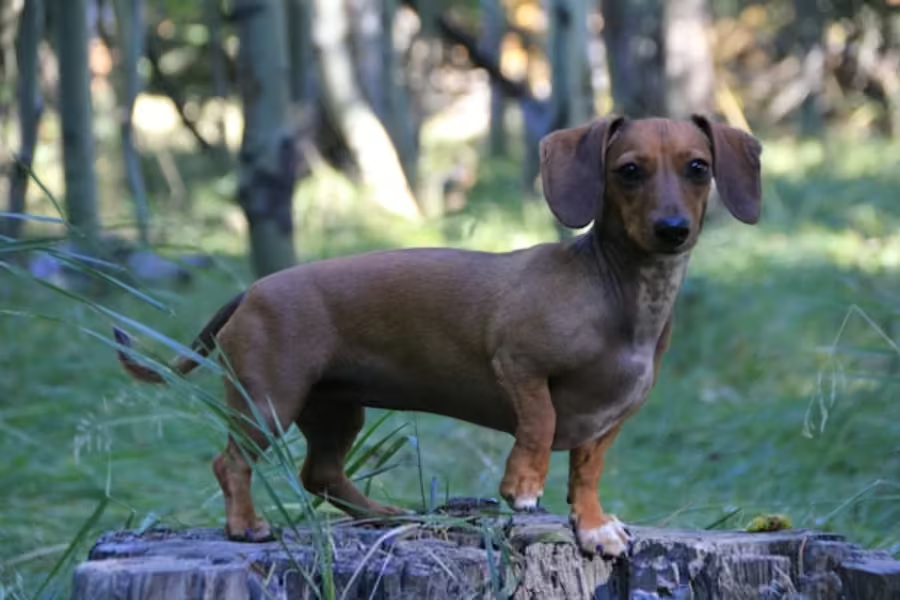
Dachshunds are peculiar and wonderful. They are stubborn in a way that is simultaneously maddening and endearing. They were bred to go underground after badgers, which tells you something about both their shape and their psychology. They are fearless, tenacious, and very confident in their own judgment.
They’re affectionate with family but can be reserved with strangers. They tend to choose a person and treat them as their primary human. They’re alert and will bark.
The important health note: their long spine and short legs make them unusually prone to intervertebral disc disease (IVDD), a painful and sometimes debilitating spinal condition. Preventing jumping from furniture, maintaining a healthy weight, and using ramps rather than stairs significantly reduces risk.
Best for: Experienced dog owners who appreciate an independent personality, apartment life (with exercise), adults-only or older children’s households
Not ideal for: Homes with lots of stairs or high furniture without ramps, owners who need a very obedient dog
8. Chihuahua
Weight: Under 6 lbs | Height: 5–8 inches | Lifespan: 14–16 years
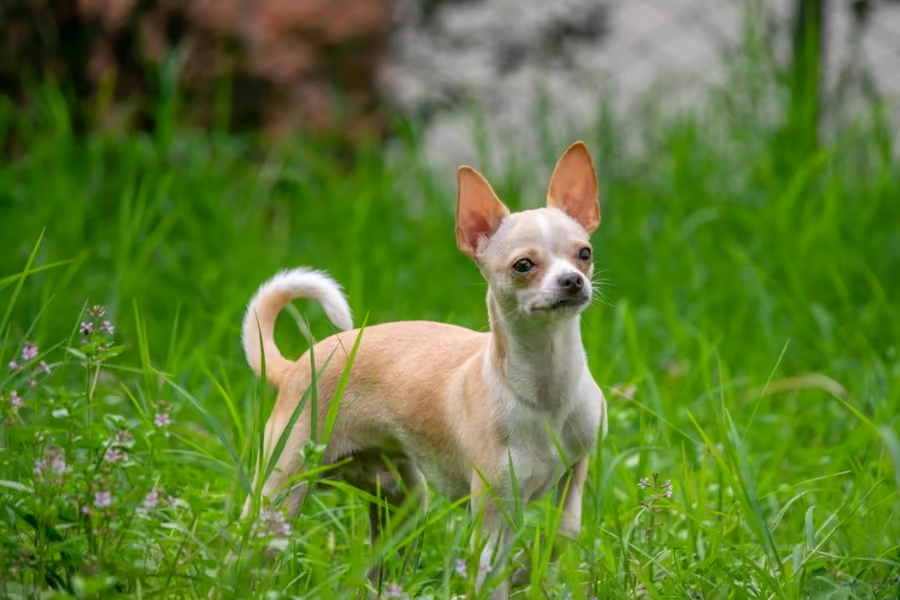
Chihuahuas are polarizing, and the reason is usually poor socialization rather than inherent temperament. A well-socialized Chihuahua from good breeding can be confident, friendly, and genuinely charming. A poorly socialized one can be anxious, reactive, and a biting risk.
The fundamental nature: they’re alert, attached to their person, and have a lot of personality relative to their size. They’re among the longest-lived breeds. They don’t require much exercise but need mental engagement.
Their fragility is the primary management concern — they’re easily injured by being sat on, stepped on, or falling from furniture. This makes them genuinely poor choices for homes with young children, not because of the Chihuahua’s temperament, but because of the physical risk to the dog.
Best for: Singles, couples, apartment life, owners who want a long-lived companion
Not ideal for: Families with young children, homes with large dogs, cold climates (they get cold easily)
9. Miniature Schnauzer
Weight: 11–20 lbs | Height: 12–14 inches | Lifespan: 12–15 years
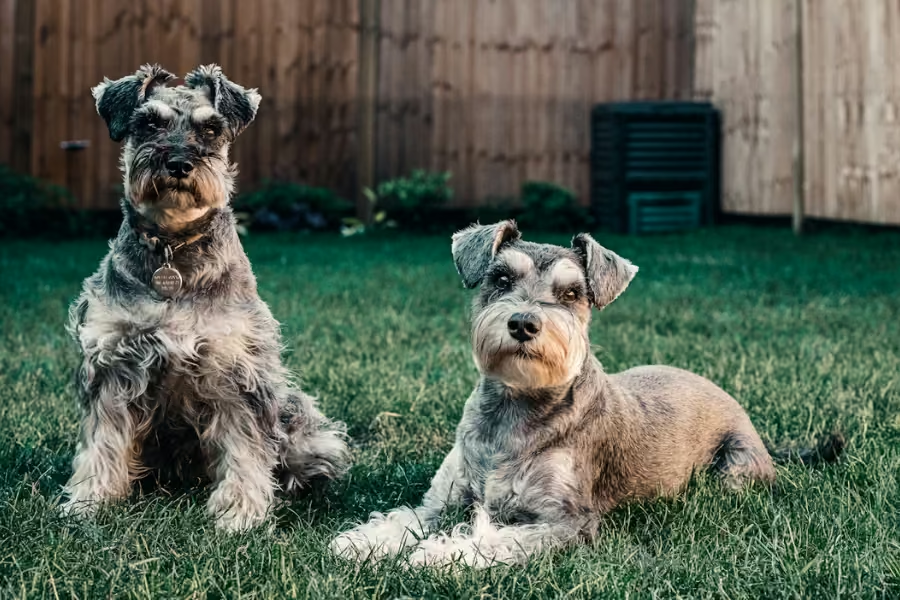
The Miniature Schnauzer is a genuinely excellent all-around dog. They’re smart, trainable, relatively adaptable, good with families, and don’t shed significantly. They’re terrier-adjacent in personality (alert, opinionated) but with a notably more agreeable disposition than many terriers.
They bark — more than some owners expect — but this is manageable with training. They need regular professional grooming (the wiry coat doesn’t shed but needs clipping or hand-stripping).
One concern: they’re prone to pancreatitis and bladder stones, conditions influenced by diet. A Miniature Schnauzer on a high-fat diet is at real risk.
Best for: Families, active singles, apartment life (with daily walks), people with mild allergies
Not ideal for: Owners who want a quiet dog or are unprepared for grooming costs
10. Bichon Frise
Weight: 12–18 lbs | Height: 9.5–11.5 inches | Lifespan: 14–15 years
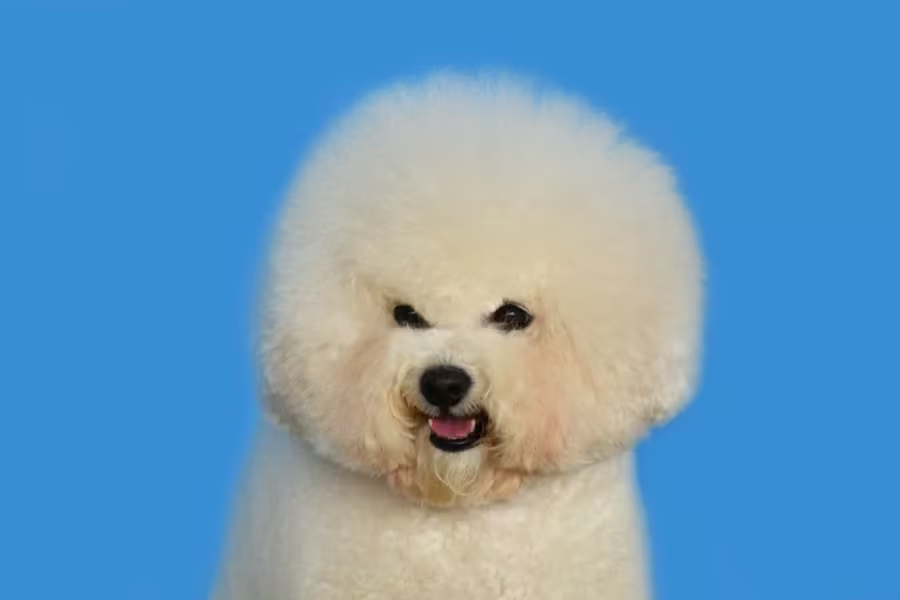
The Bichon is a reliably cheerful dog. They were bred specifically for companionship, and they excel at it — sociable, gentle, playful, and adaptable. They’re good with children and other animals. They don’t tend toward aggression or excessive anxiety.
They’re considered hypoallergenic (low-shedding), which makes them a consistent first choice for allergy-affected households. The coat needs professional grooming every 4–6 weeks.
The one knock: they can be difficult to house train. Patience and consistency are required.
Best for: Families, people with mild pet allergies, apartment life, first-time dog owners
Not ideal for: Owners who want minimal grooming costs
11. Havanese
Weight: 7–13 lbs | Height: 8.5–11.5 inches | Lifespan: 14–16 years
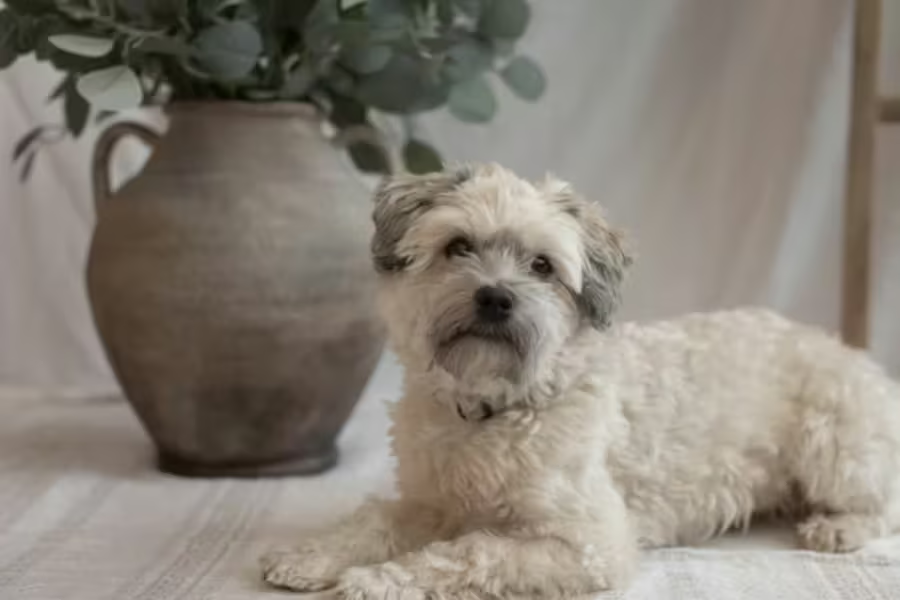
Cuba’s national dog is one of the most underrated small breeds. Havanese are affectionate, adaptable, and notably easy to train for a small breed. They’re social — genuinely interested in people, not just their primary family. They do well in apartments and houses, in the city and the suburbs.
They’re often recommended as a softer alternative to Bichons or Maltese — similar low-shedding coat, but with a slightly more playful and trainable disposition.
The coat in its natural state is long and silky; many owners keep it in a shorter trim for manageability.
Best for: First-time dog owners, families, apartment life, people who want a trainable small breed
Not ideal for: Owners who want minimal coat maintenance
12. Pug
Weight: 14–18 lbs | Height: 10–13 inches | Lifespan: 13–15 years
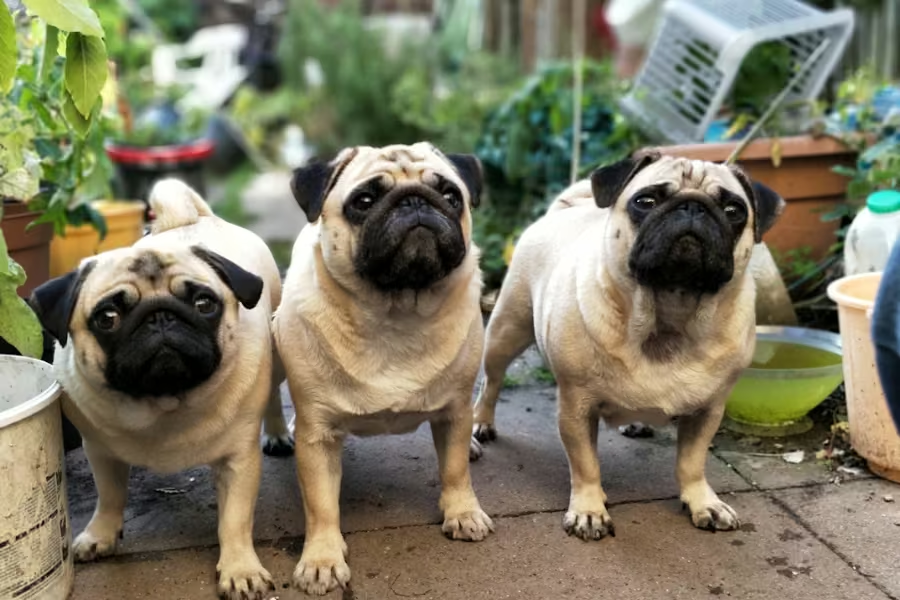
Pugs are beloved for good reason — they’re funny, affectionate, and laid-back in a way that makes them excellent apartment dogs. They’re people-oriented and not remotely aloof. They want to be in the same room as you, ideally on you.
The honest health picture: like French Bulldogs, Pugs are brachycephalic and share the same respiratory limitations. They overheat easily. They’re prone to skin fold dermatitis, eye problems (their eyes protrude and are easily injured), and hip issues. Obesity dramatically worsens all of these conditions — weight management is important.
Best for: Apartment life, low-exercise households, people who want a very people-oriented dog
Not ideal for: Hot climates without air conditioning, active owners, anyone looking for a low-maintenance health situation
13. Boston Terrier
Weight: 12–25 lbs | Height: 15–17 inches | Lifespan: 11–13 years
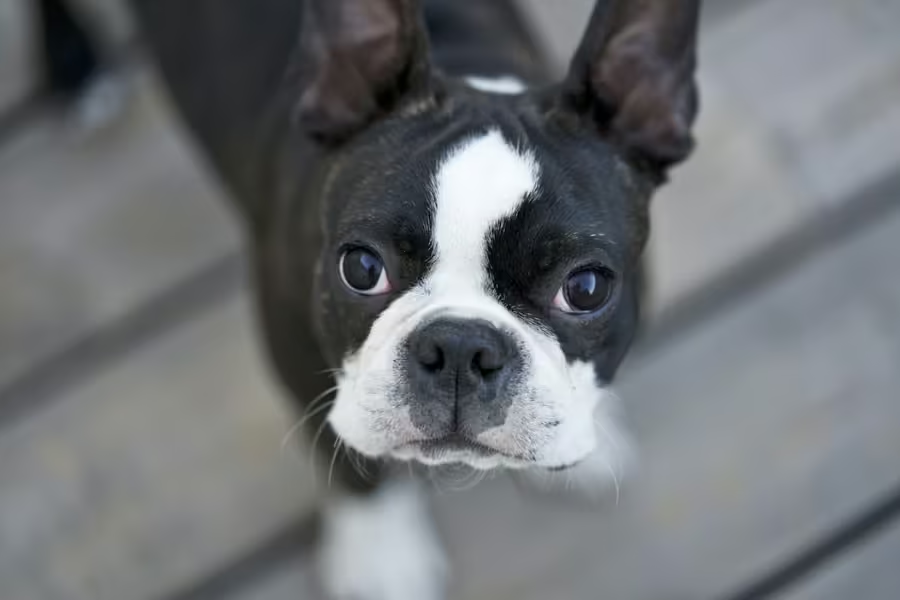
Sometimes called “the American gentleman,” the Boston Terrier has a distinctive personality: friendly, smart, lively, and with an expressive face that communicates a lot. They’re easier to train than most small breeds and more athletic than they look.
They’re brachycephalic — less severely than Frenchies or Pugs, but the same heat and respiratory considerations apply. They snore. They’re gassy (famously so).
They’re also one of the more adaptable small breeds — comfortable in apartments or houses, with active or quieter owners, alone or in multi-dog households.
Best for: First-time dog owners, families, apartment life, moderately active owners
Not ideal for: Very hot climates, owners who need a fully hypoallergenic dog
14. Cocker Spaniel (American and English)
Weight: 20–30 lbs | Height: 13.5–15.5 inches | Lifespan: 10–14 years
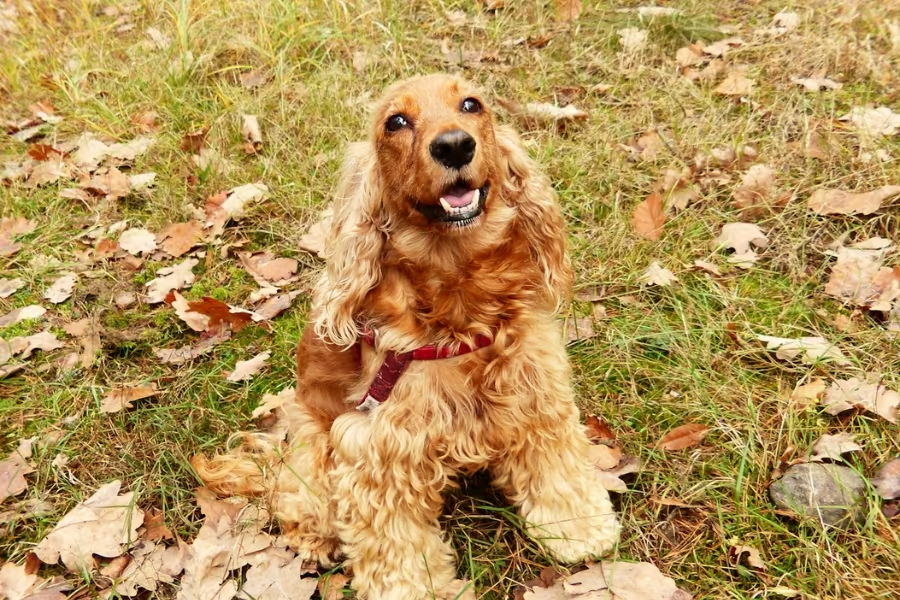
The Cocker Spaniel sits at the upper edge of small breeds but earns its place here. They’re gentle, affectionate, and one of the more trainable small-to-medium breeds. The American Cocker is generally slightly smaller and softer in temperament; the English Cocker is a little more energetic and “sporting.”
They need regular grooming — the silky coat mats if not brushed frequently, and professional grooming is typically required every 6–8 weeks. The ears are particularly prone to infection; routine ear cleaning is important.
Best for: Families with children, active singles, suburban environments
Not ideal for: Owners who won’t commit to grooming routines
15. Papillon
Weight: 5–10 lbs | Height: 8–11 inches | Lifespan: 14–16 years
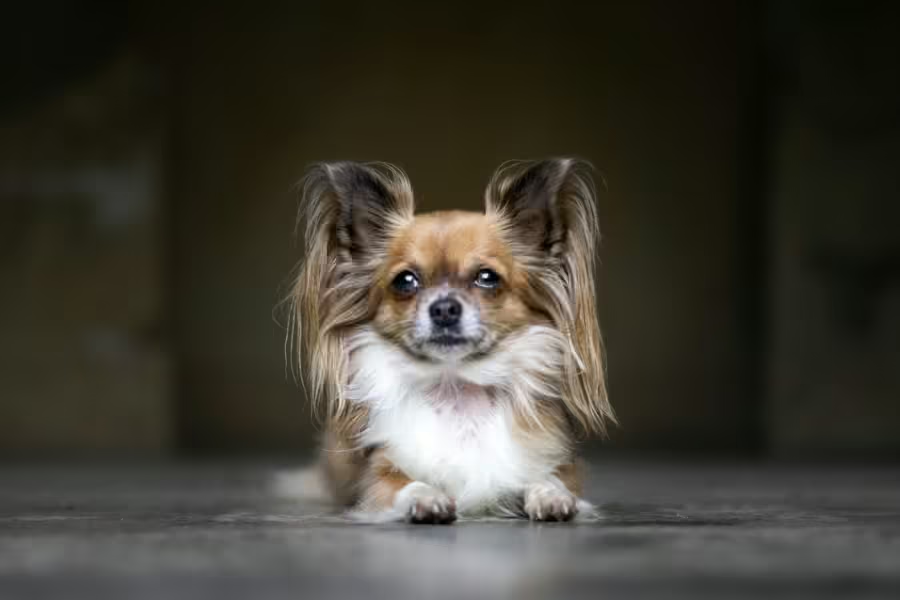
The Papillon is one of the most trainable small breeds — consistently appearing in agility and obedience competitions and winning. They’re athletic, intelligent, and quick to learn. The butterfly ears are iconic, but the personality is the real draw.
They can be cautious with strangers but are generally friendly. They do well in households with other dogs. They need mental stimulation — a Papillon who is bored will find ways to entertain themselves that you won’t appreciate.
Best for: Experienced dog owners who enjoy training, active households, apartment life (with exercise and enrichment)
Not ideal for: Owners who want a low-key, low-energy dog
16. Poodle (Toy and Miniature)
Weight: Toy: under 10 lbs | Mini: 10–20 lbs | Height: Toy: under 10 inches | Mini: 10–15 inches | Lifespan: 10–18 years
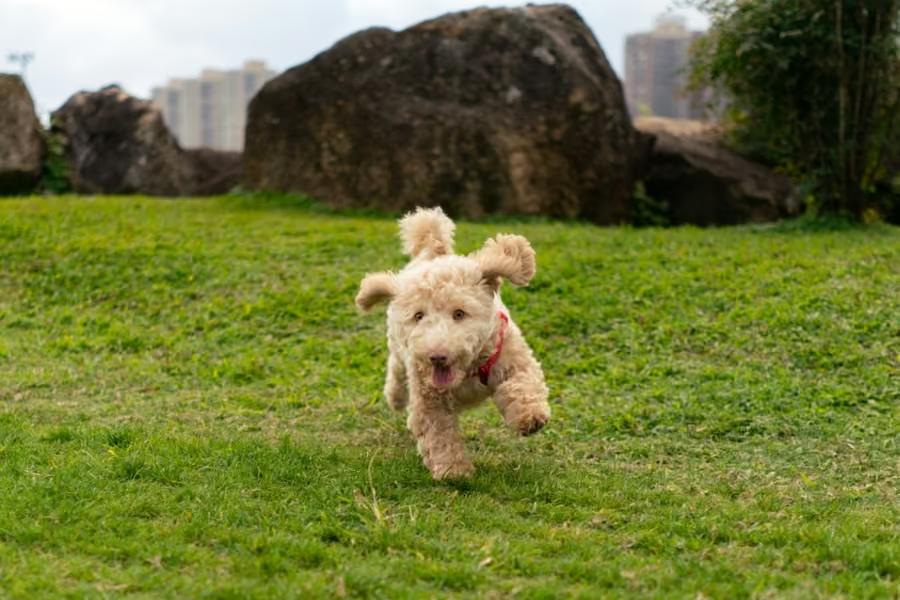
Poodles are among the most intelligent dogs in existence — a fact that is both their greatest strength and their greatest challenge. A Poodle who is exercised and mentally stimulated is an extraordinary companion. A bored Poodle is a disaster.
They’re low-shedding (hypoallergenic), highly trainable, and adaptable to almost any environment. The Toy is more delicate; the Miniature is sturdier and often easier to manage.
They need professional grooming every 4–6 weeks if kept in a traditional cut; many owners opt for simpler teddy bear or lamb cuts.
Best for: Active, engaged owners; allergy sufferers; anyone who enjoys training and enrichment activities
Not ideal for: Owners who want a low-maintenance, low-stimulation dog
17. West Highland White Terrier (Westie)
Weight: 15–22 lbs | Height: 10–11 inches | Lifespan: 13–15 years
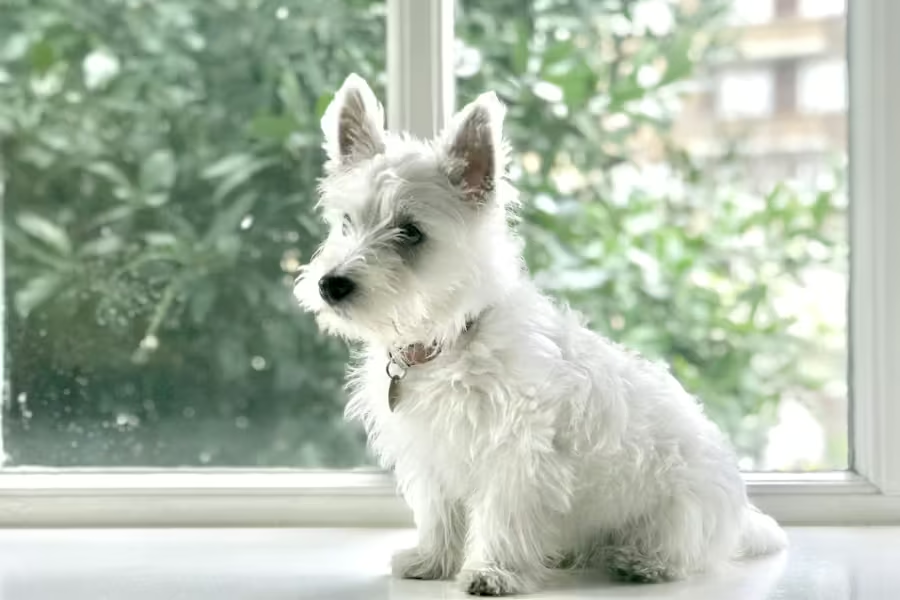
Westies are sturdy, confident, and self-possessed in the way that terriers characteristically are. They were bred in Scotland to hunt small vermin, and that instinct remains — they’re alert, independent, and will pursue anything small that moves.
They’re friendly without being fawning, and adaptable without being passive. They do well in a variety of living situations but need daily exercise and a secure garden (they will escape if given the chance).
Skin conditions are common in the breed — Westies are prone to dermatitis and allergies, which can be expensive to manage.
Best for: Active owners, experienced dog owners, homes without small animals
Not ideal for: Homes with hamsters or rabbits, owners who want a very low-shedding or very obedient dog
18. Scottish Terrier
Weight: 18–22 lbs | Height: 10 inches | Lifespan: 11–13 years
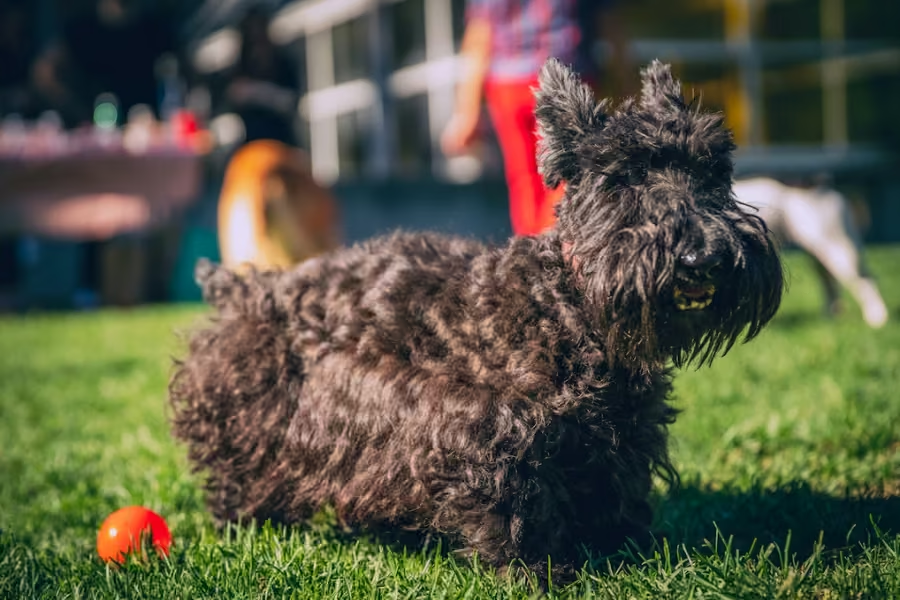
The Scottie is one of the most recognizable dog silhouettes in the world — that compact, dignified profile with the long beard and expressive eyebrows. The personality matches: they are independent, serious, and deeply loyal to their family without being effusive about it.
They are not the dog for owners who need constant affirmation that their dog loves them. The Scottie loves you; they just don’t feel the need to demonstrate it every hour.
They can be stubborn and are not always the easiest breed to train. They do not get along well with other dogs, and their terrier instincts make homes with small animals challenging.
Best for: Experienced dog owners, individuals who appreciate an independent personality
Not ideal for: Multi-dog households, families with small children, first-time dog owners
19. Basenji
Weight: 22–24 lbs | Height: 16–17 inches | Lifespan: 13–14 years
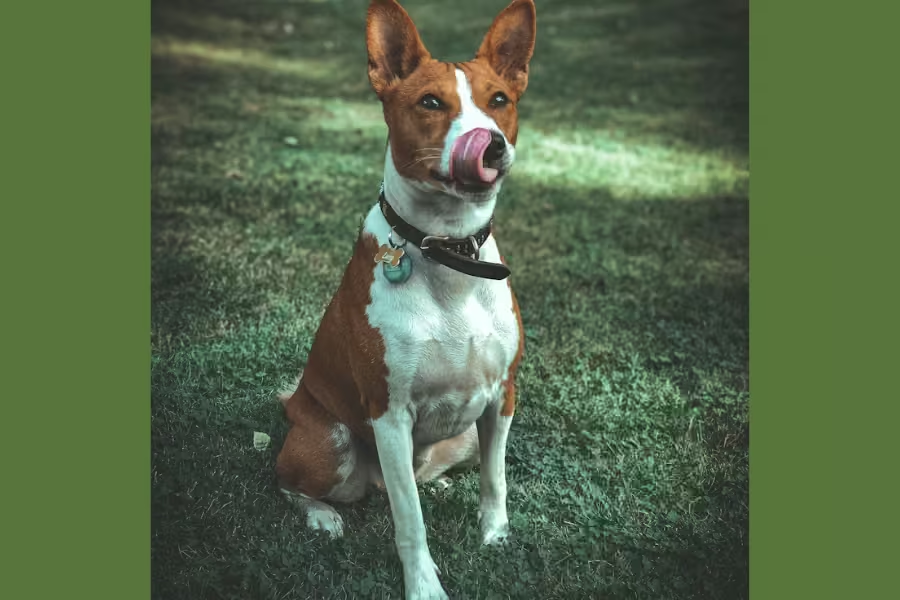
The Basenji sits at the top edge of the “small” category and is one of the most distinctive dogs on this list. They don’t bark — they yodel. They’re catlike in their self-grooming and independence. They’re ancient (one of the oldest breeds), and their behavior reflects a psychology that’s less domesticated in the traditional sense.
They’re not ideal for first-time owners. They require significant exercise, are escape artists, have strong prey drive, and can be destructive if bored. But for the right owner, they’re extraordinary — elegant, clean, devoted, and fascinating.
Best for: Experienced owners who want something unusual, active lifestyles, homes without cats or small animals
Not ideal for: First-time owners, homes with cats, owners who need reliable recall off-leash
20. Italian Greyhound
Weight: 7–14 lbs | Height: 13–15 inches | Lifespan: 14–15 years
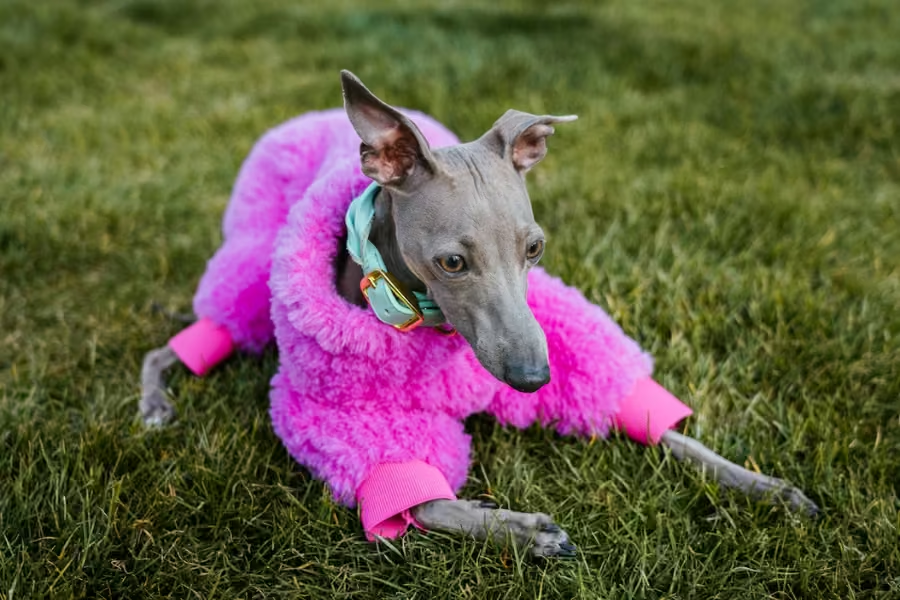
The Italian Greyhound (IG) is a miniature sighthound — slender, elegant, and fast enough to make you forget you have a small dog. They’re affectionate and people-oriented (often described as velcro dogs), gentle, and quiet.
They’re also somewhat fragile — thin skin and narrow bones make them prone to injuries, and they are genuinely cold-sensitive (a sweater is not optional in winter). House training can be challenging.
They fit best in calm, gentle households — they can be anxious around loud, chaotic energy.
Best for: Quiet households, apartment life, owners who enjoy dressing their dog
Not ideal for: Homes with young children, cold climates without appropriate management, owners who need a robust, rough-and-tumble dog
21–35: Additional Best Small Breeds
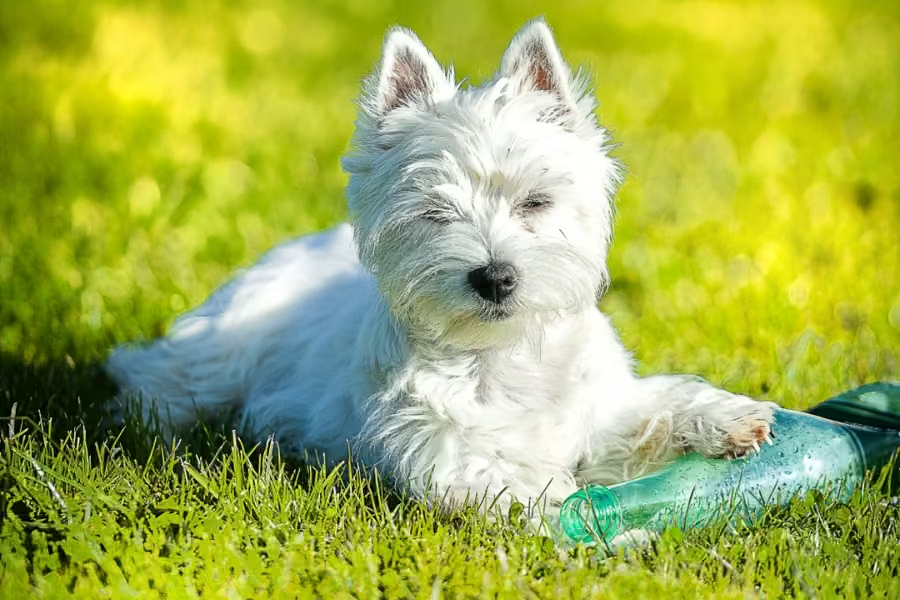
21. Cairn Terrier | 10–16 lbs | The original Toto. Sturdy, curious, and tenacious. Less maintenance than many terriers. Good with children.
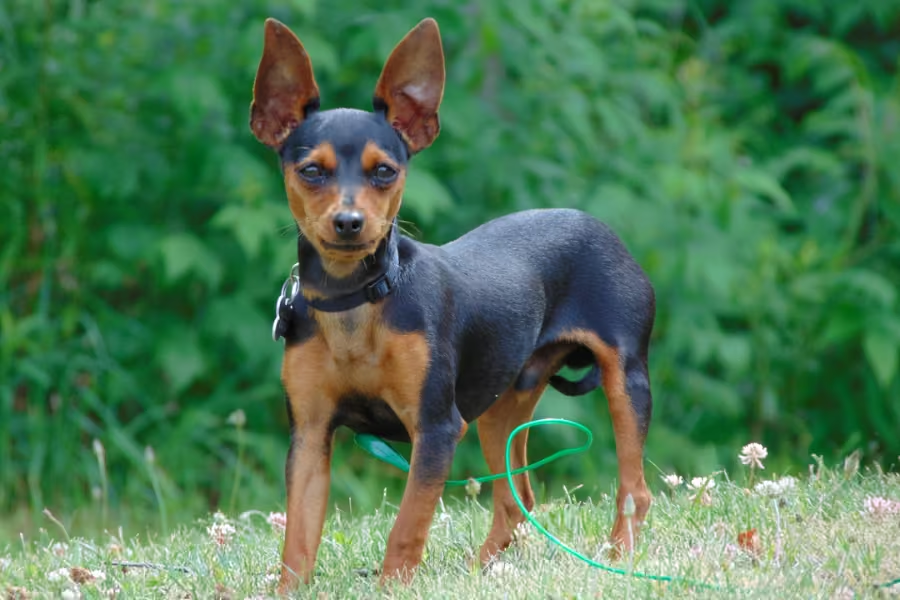
22. Miniature Pinscher | 8–10 lbs | Big dog in a small body. Athletic, alert, and fearless. Needs secure fencing. Not for first-time owners.
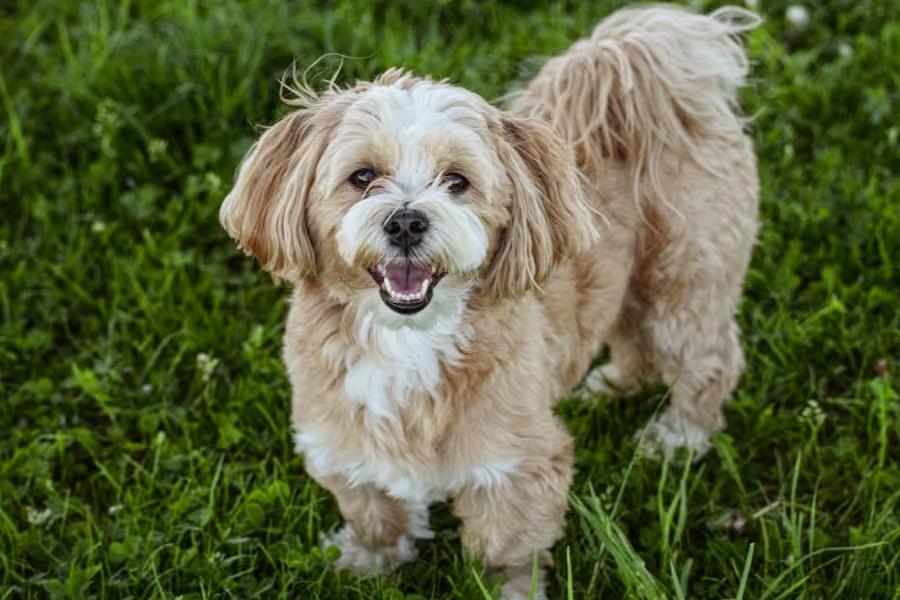
23. Lhasa Apso | 12–18 lbs | Ancient Tibetan breed. Independent, watchful, dignified. Excellent with older children and adults. A long coat requires maintenance.
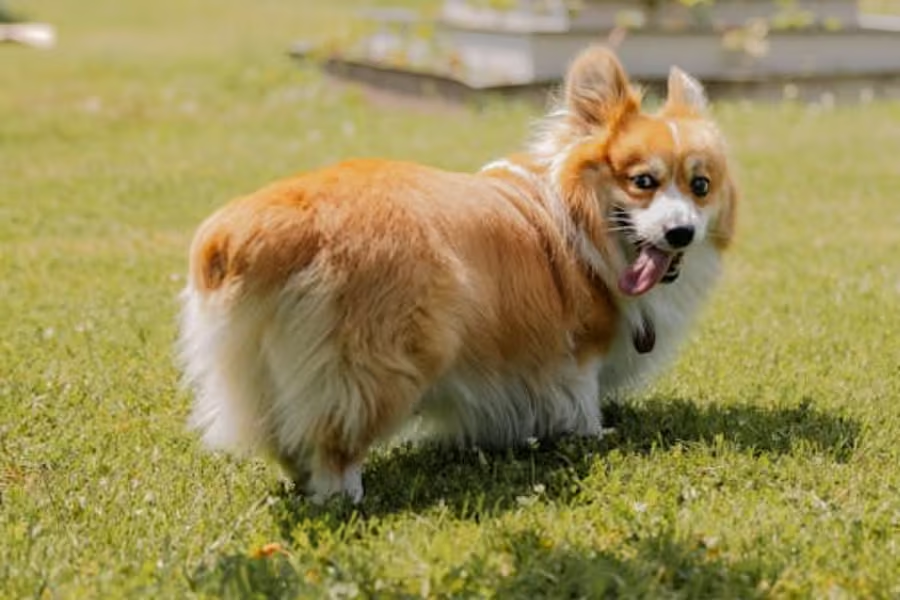
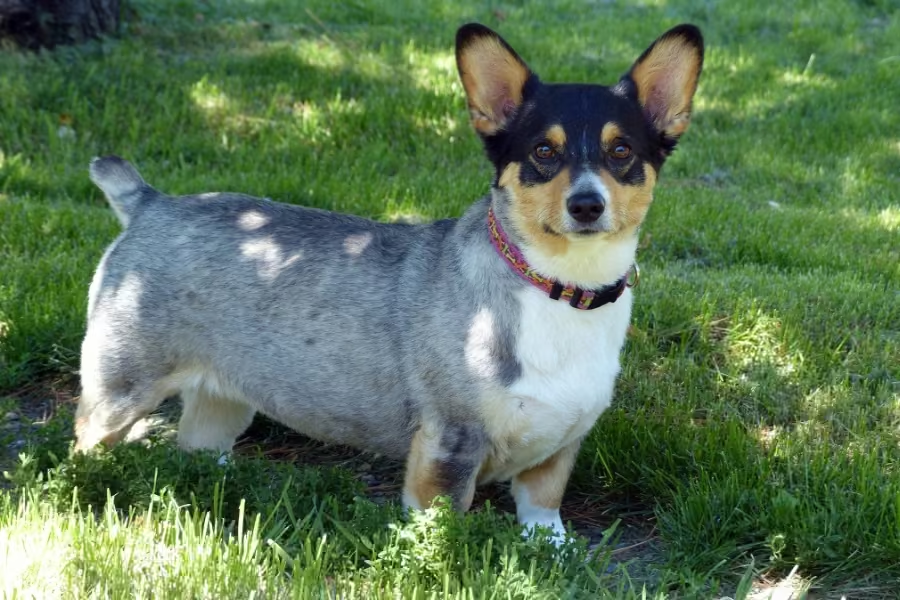
24. Welsh Corgi (Pembroke) | 28–30 lbs | Borders “small-medium” but small in height. Herding instinct, very smart, excellent with families. Moderate-high energy.
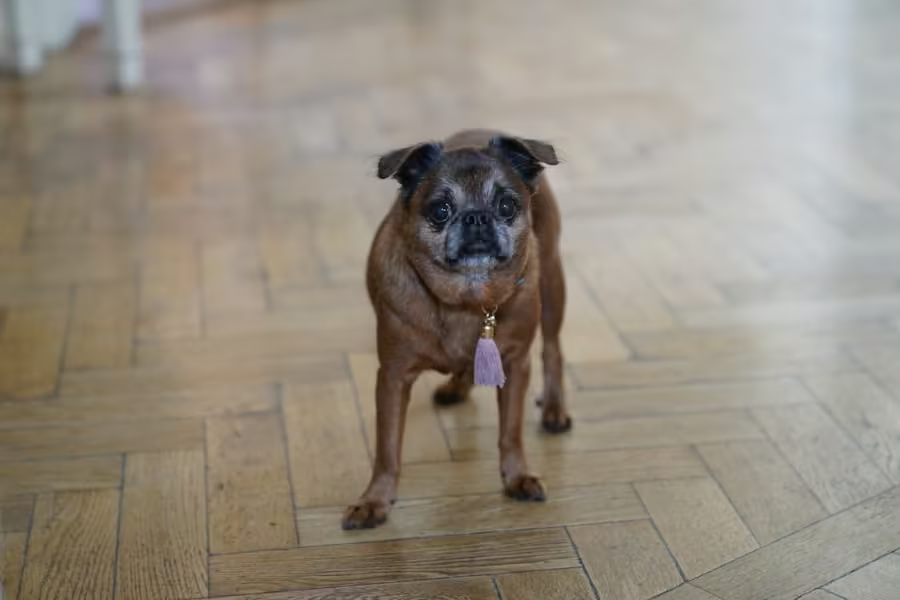
25. Brussels Griffon | 8–10 lbs | Comically expressive face. Deeply attached to one person. Apartment-friendly but needs companionship.
26. Toy Fox Terrier | 3.5–7 lbs | Athletic and clever. Good for active small dog owners. Alert barker.
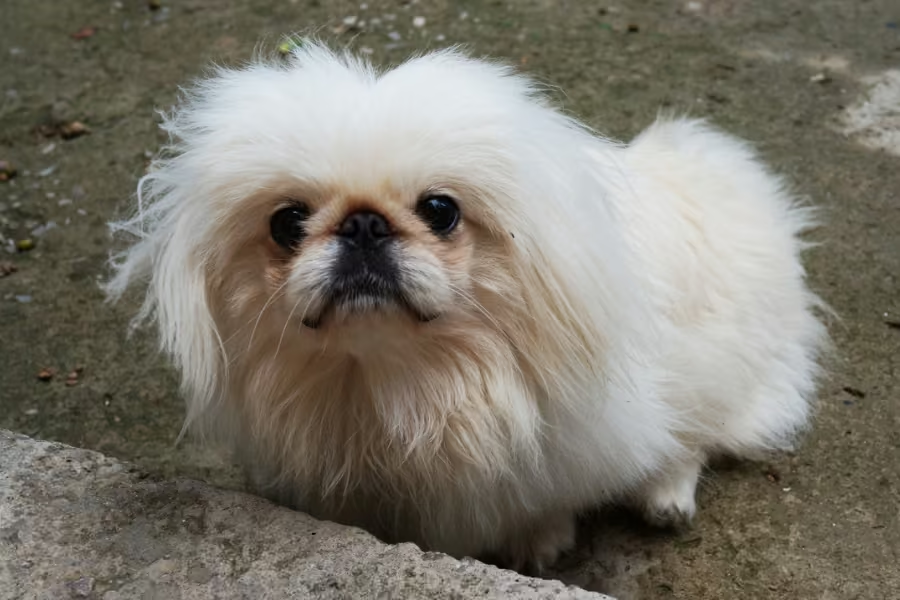
27. Japanese Chin | 7–11 lbs | Catlike, quiet, elegant. Ideal for calm apartments and elderly owners. Low exercise needs.
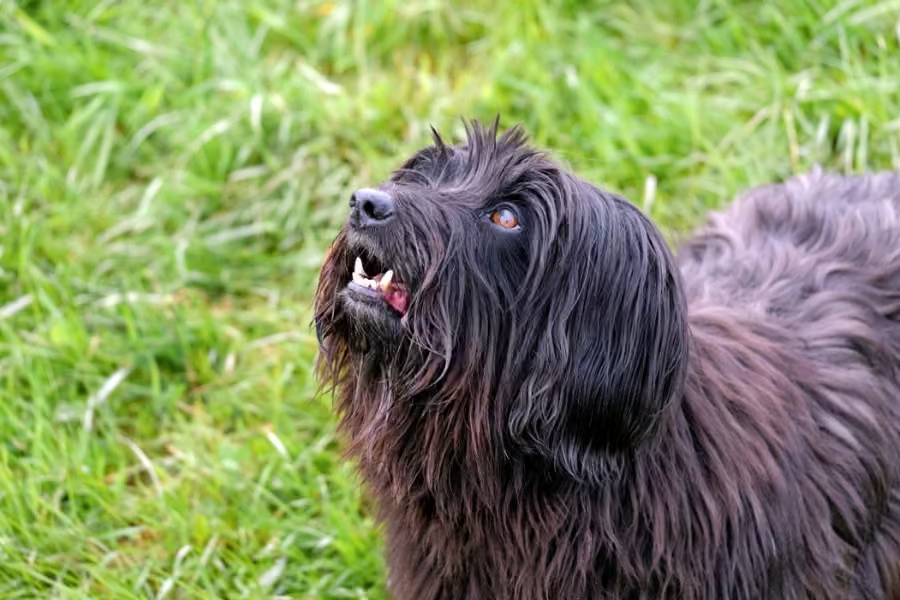
28. Affenpinscher | 7–10 lbs | “Monkey dog” with enormous personality. Stubborn but entertaining. Not for first-time owners.
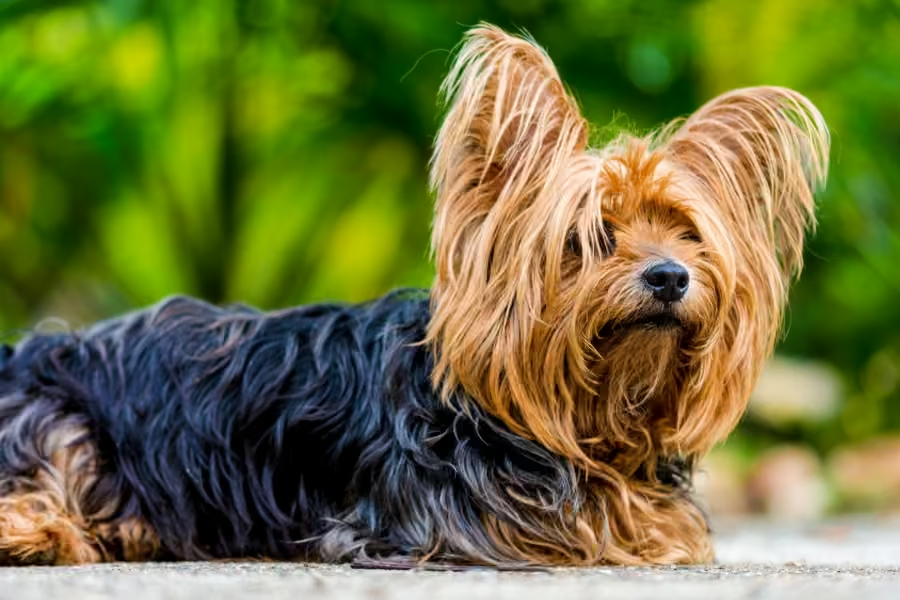
29. Silky Terrier | 8–10 lbs | Similar to Yorkshire Terrier but slightly more laid-back. Beautiful silky coat. Good family dog.
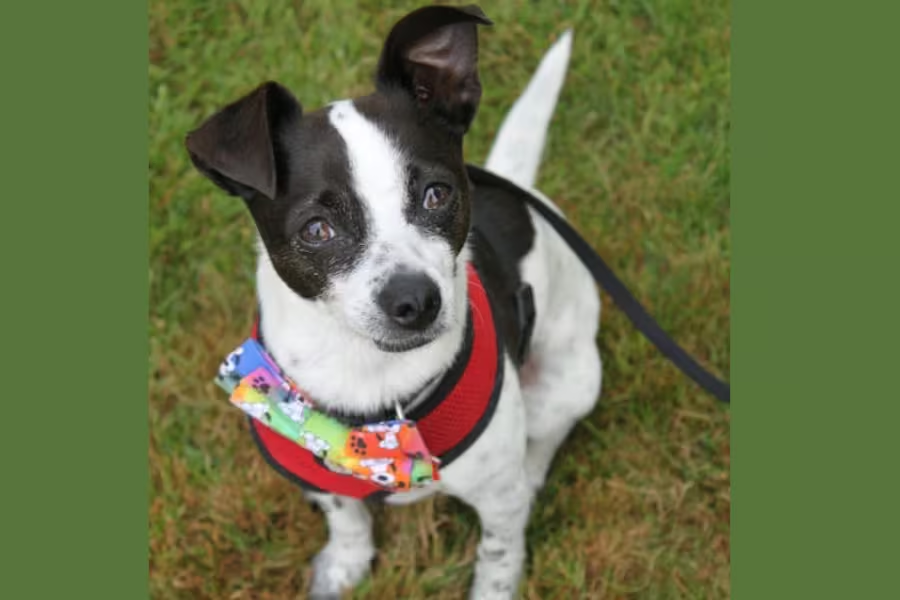
30. Rat Terrier | 10–25 lbs | American farm breed. Athletic, smart, trainable. Good family dog and low-maintenance coat.
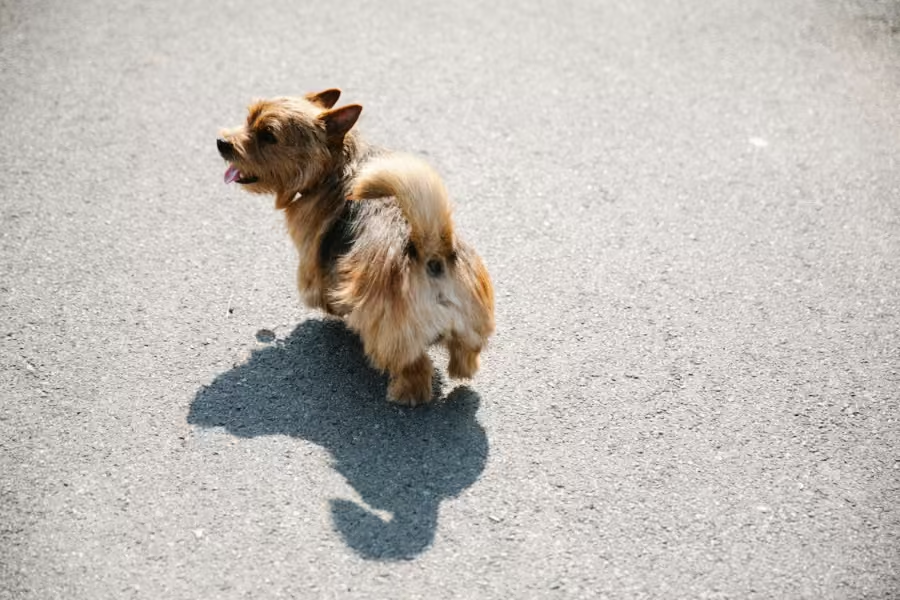
31. Norwich Terrier | 12 lbs | Among the more agreeable terriers. Good with other dogs. Sturdy and weather-resistant.
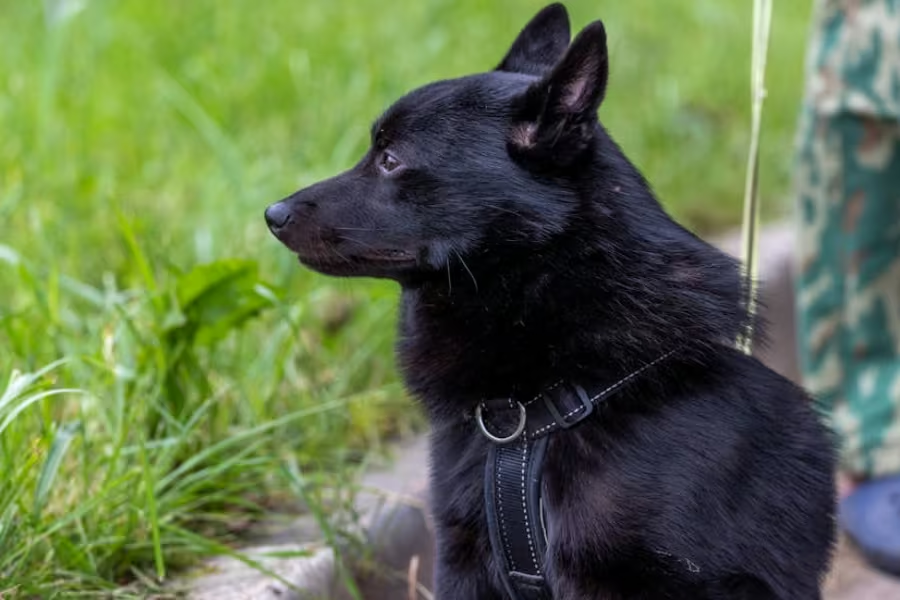
32. Schipperke | 10–16 lbs | Curious, mischievous, surprisingly active. Needs enrichment. Bold and self-sufficient.
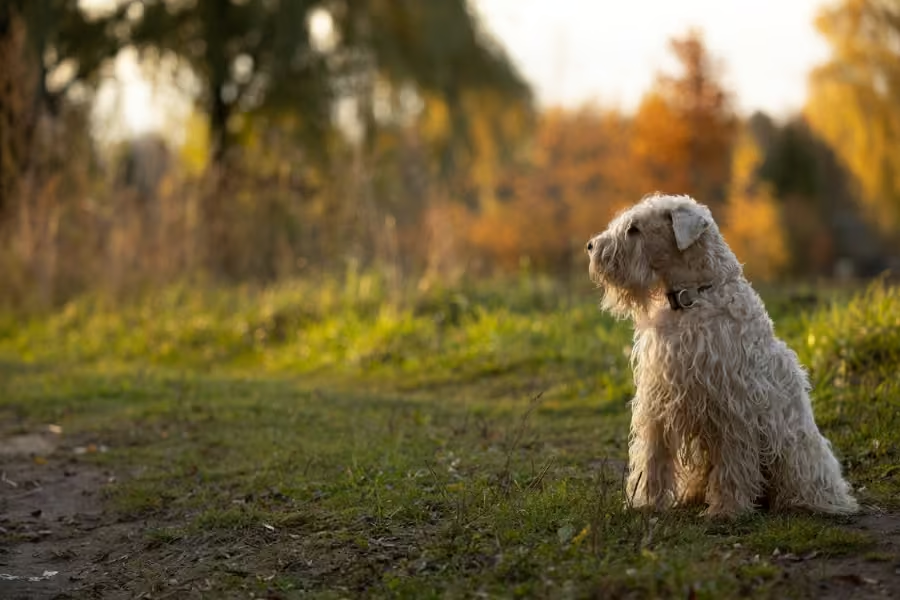
33. Sealyham Terrier | 23–24 lbs | One of the calmer terriers. Good apartment dog. Rarer breed — find reputable breeders carefully.
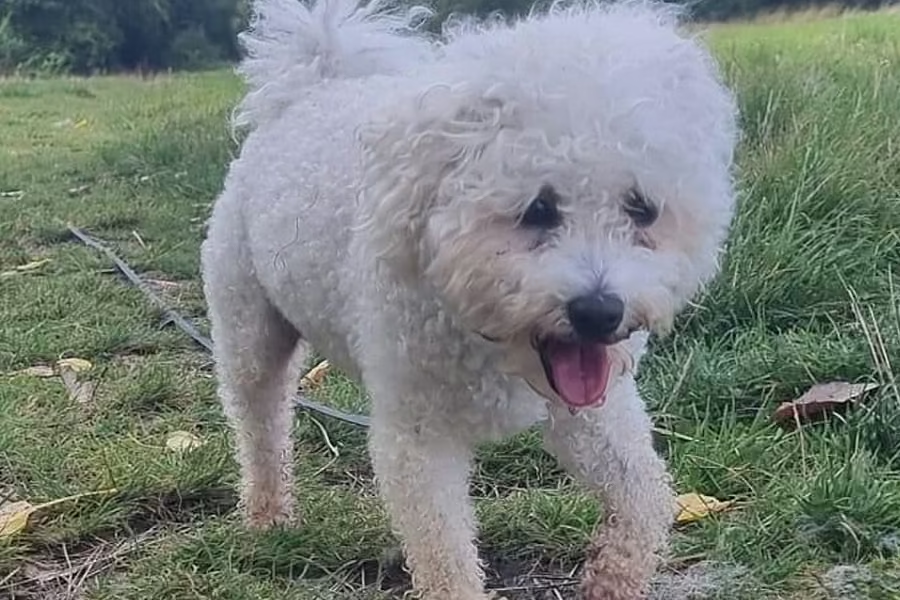
34. Bolognese | 5.5–9 lbs | Italian companion breed, similar to Bichon. Calm, devoted, and trainable. Low-shedding.
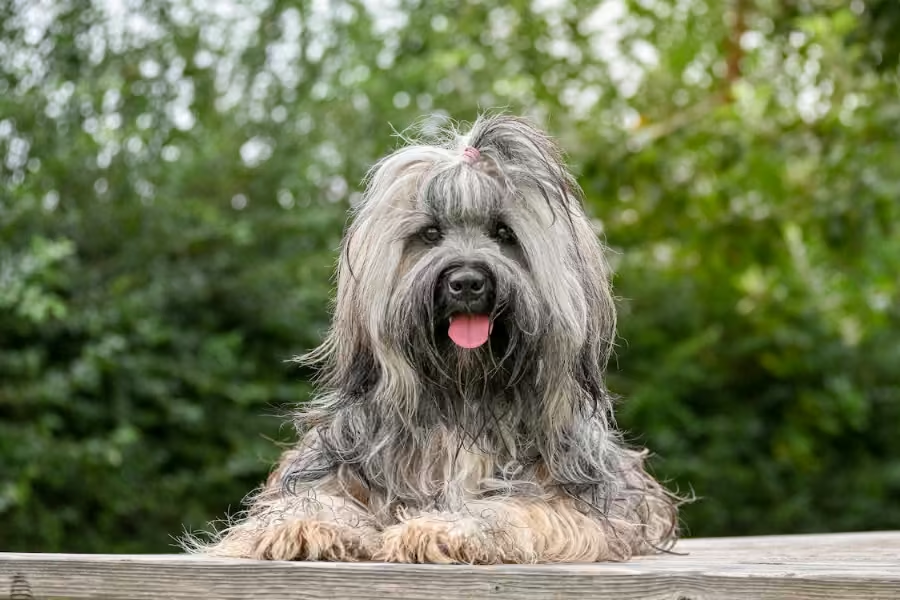
35. Löwchen | 15 lbs | “Little Lion Dog.” Rare, cheerful, trainable, and hypoallergenic. Excellent all-around small breed.
Quick-Reference Guides
Best Small Dogs for Apartments
The key factors for apartment life: low-to-moderate exercise needs, manageable bark levels, and adaptability to smaller spaces.
Top picks: French Bulldog | Cavalier King Charles Spaniel | Shih Tzu | Pug | Bichon Frise | Maltese | Japanese Chin | Italian Greyhound | Havanese
Best Hypoallergenic Small Dogs
Truly hypoallergenic dogs don’t exist — all dogs produce some level of dander. But low-shedding breeds significantly reduce the allergenic load.
Top picks: Miniature Poodle | Toy Poodle | Bichon Frise | Maltese | Havanese | Miniature Schnauzer | Bolognese | Löwchen | Yorkshire Terrier (lower shedder)
Best Small Dogs for Families with Kids
The non-negotiables: patience with children, durability (not too fragile), and resilience to noise and movement.
Top picks: Beagle | Cavalier King Charles Spaniel | Boston Terrier | Miniature Schnauzer | Bichon Frise | Havanese | Cairn Terrier | Cocker Spaniel | Rat Terrier
Avoid: Chihuahua, Pomeranian (too fragile), Italian Greyhound (too fragile)
Calmest Small Dog Breeds
For owners who want a small dog with a genuinely easy-going temperament.
Top picks: Cavalier King Charles Spaniel | Japanese Chin | Shih Tzu | Pug | Bolognese | Maltese | French Bulldog | Löwchen | Cocker Spaniel
Most Affectionate Small Dog Breeds
Dogs who actively seek physical affection and want to be as close to their person as possible.
Top picks: Cavalier King Charles Spaniel | Maltese | Italian Greyhound | Bichon Frise | Havanese | Pug | Shih Tzu | Brussels Griffon
Small Dog Breeds That Don’t Shed (or Shed Very Little)
Top picks: Miniature Poodle | Toy Poodle | Bichon Frise | Maltese | Yorkshire Terrier | Miniature Schnauzer | Havanese | Bolognese | Shih Tzu | Löwchen
Easiest Small Dog Breeds to Train
Top picks: Papillon | Miniature Poodle | Havanese | Shetland Sheepdog (small-medium) | Boston Terrier | Miniature Schnauzer | Rat Terrier | Toy Fox Terrier
Frequently Asked Questions
Are small dogs harder to train than large dogs? No — that’s a myth perpetuated by inconsistent training. Small dogs are often undertrained because owners let behavior slide that they wouldn’t accept from a 60-lb dog. When trained consistently with the same expectations applied to large dogs, small breeds train just as well.
Do small dogs live longer than large dogs? Generally yes. The inverse relationship between body size and lifespan in dogs is well-documented. Small dogs commonly live 12–16+ years; some individuals (particularly Chihuahuas and Poodles) reach their late teens. Large and giant breeds typically have 8–12 year lifespans.
Are small dogs good for first-time owners? It depends on the breed. A Cavalier King Charles Spaniel or a Bichon Frise is an excellent first dog. A Basenji or a Miniature Pinscher is not. Read the individual breed profiles and match them to your experience level.
Which small breeds are best with cats? Breeds with low prey drive are better cohabitants: Bichon Frise, Cavalier King Charles Spaniel, Maltese, Pug, Japanese Chin, Havanese. Terriers and sighthounds tend to be more challenging.
What’s the difference between “toy” and “small” breeds? “Toy” is an AKC and kennel club classification for the smallest breeds (generally under 12 lbs). “Small” is a broader descriptor covering all breeds under approximately 25–30 lbs. This guide uses “small” broadly.